
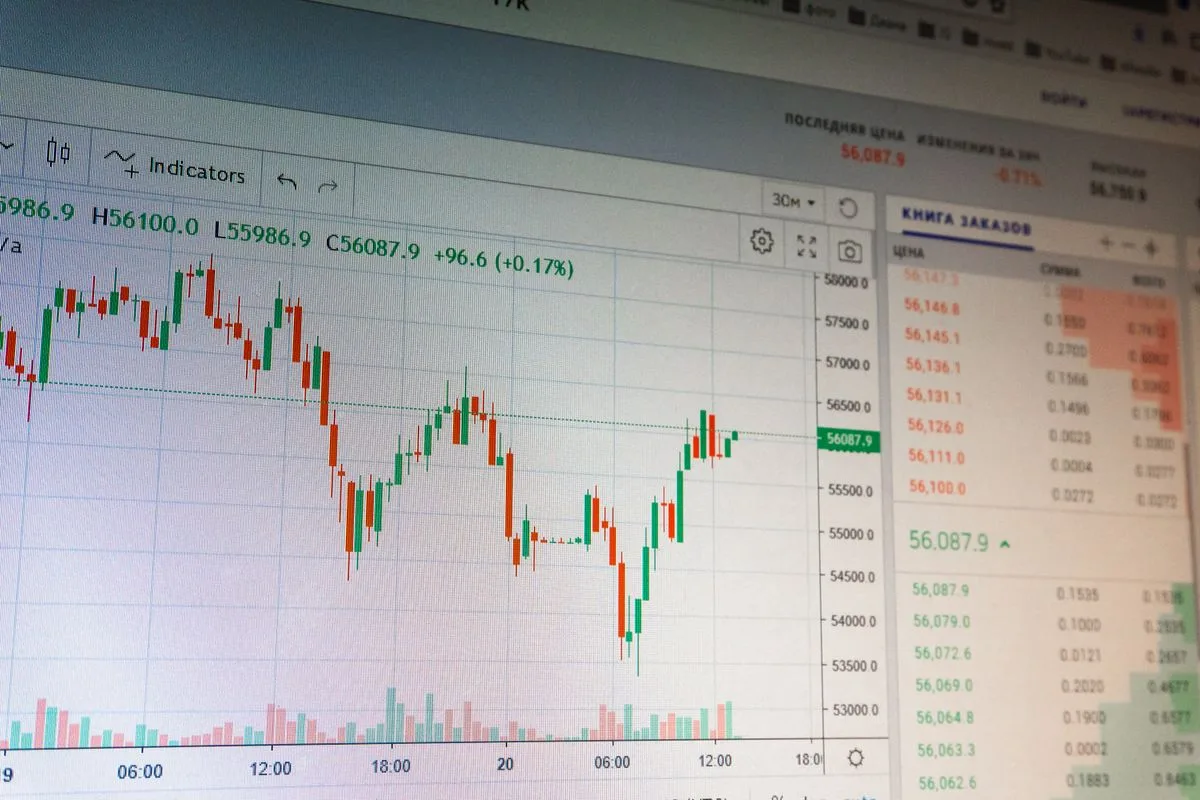
A crypto order book is a live list of every buy and sell order waiting to be matched on an exchange, organized by price. It shows what traders are actually willing to pay right now, not what a chart implies about where price is headed. Reading it well means understanding depth, spread, and how orders cluster before a trade ever fills.
Most retail traders never open the book. They watch a candlestick chart and a price ticker, and they treat the number on screen as the whole market. But that number is only the last trade that happened. The book is everything waiting to happen next: the stacked buy orders below price, the stacked sell orders above it, and the gap between them.
This matters most at the moment of execution. A trader placing a market order is not trading against a chart pattern. They are trading against whatever sits in the book at that instant, and a thin book can turn a routine entry into a costly one.
What Does a Crypto Order Book Actually Show?
An order book has two sides. The bid side lists buy orders, ranked from the highest price a buyer will pay down to the lowest. The ask side lists sell orders, ranked from the lowest price a seller will accept up to the highest. The gap between the best bid and the best ask is the spread.
Below and above those best prices sits depth: the total size of orders waiting at each price level. A crypto order book with deep bids just under the current price suggests buyers are prepared to absorb selling pressure there. A book with almost nothing until a much lower price suggests the opposite: little cushion if selling accelerates.
Exchanges usually show this as a depth chart, a stepped line that grows wider as it moves away from the current price. It is a visual shortcut for the same raw data. Some interfaces aggregate or throttle updates for readability, so what a trader sees on screen is often a slightly smoothed version of a book that is actually updating many times each second underneath.
How Do Traders Read Support and Resistance From Depth?
Support and resistance are usually taught as lines drawn on a price chart. In a crypto order book, they show up as walls: large clusters of resting orders at a specific price. A big stack of buy orders just below the market can act like a floor, at least until it is filled or pulled.
The important qualifier is that these walls are not commitments. Any resting limit order, an order to buy or sell at a set price rather than immediately, can be canceled before it trades. A wall that looks like solid support can vanish in seconds, which is one reason depth analysis is a read on current intent, not a promise about future price.
Traders who rely on this method usually watch how a wall behaves as price approaches it, not just that the wall exists. Does size get added as price nears it, or does it get pulled back? That behavior says more about real conviction than the static snapshot does.
What Practical Steps Turn Depth Data Into a Trade Plan?
Depth analysis is only useful if it changes a specific decision: order type, order size, or timing. A few practical habits separate traders who use the book from those who just glance at it.
- Check the spread before sizing an order. A wide spread on a thin crypto order book means a market order can fill at a noticeably worse price than the last traded price.
- Split large orders. Placing one large market order against a shallow book can move the price against the trader; smaller, staged orders reduce that effect.
- Use limit orders when the goal is price control. A limit order only fills at the chosen price or better, which trades certainty of price for uncertainty of timing.
- Watch depth on both sides, not just the side matching the trade. A lopsided book often explains sudden, fast moves better than any headline does.
None of this predicts where price goes next. It describes how a given trade is likely to execute given what is currently resting in the book, which is a different and more answerable question.
What Can Go Wrong When Reading Order Book Data?
The book can mislead as easily as it can inform. Large resting orders are sometimes placed and pulled quickly to create a false impression of demand or supply, a practice regulators in traditional derivatives markets have long treated as a form of manipulation. The CFTC has pursued enforcement matters involving this kind of spoofing in futures markets, and the same incentive exists on crypto venues.
Liquidity also varies enormously by exchange and by trading pair. A book that looks deep on a major exchange's flagship pair can look almost empty for the same asset on a smaller venue. Comparing depth across venues without accounting for that difference leads to bad conclusions.
Finally, depth is a snapshot. It changes constantly, and a book that looks supportive one minute can thin out the next as orders are filled or withdrawn. Traders who treat a single depth read as a fixed structure, rather than a moving one, tend to be the ones surprised by fast moves. Market structure rules that govern how orders are displayed and executed in regulated US markets are set in part by the SEC, and while crypto order books sit outside that direct framework on most venues, the underlying mechanics of matching bids to asks work the same way.
Conclusion
A crypto order book is not a forecasting tool. It is a record of current intent: who is willing to trade, at what price, and in what size, right now. Reading it well means treating depth, spread, and wall behavior as inputs to execution decisions, not as signals about where price must go. What remains unknown after any depth read is simple and important: resting orders can be canceled, liquidity can vanish, and no book, however deep, guarantees a fill at the expected price. This is market information, not investment advice, and crypto markets remain volatile enough that losses are possible regardless of how carefully a book is read.