
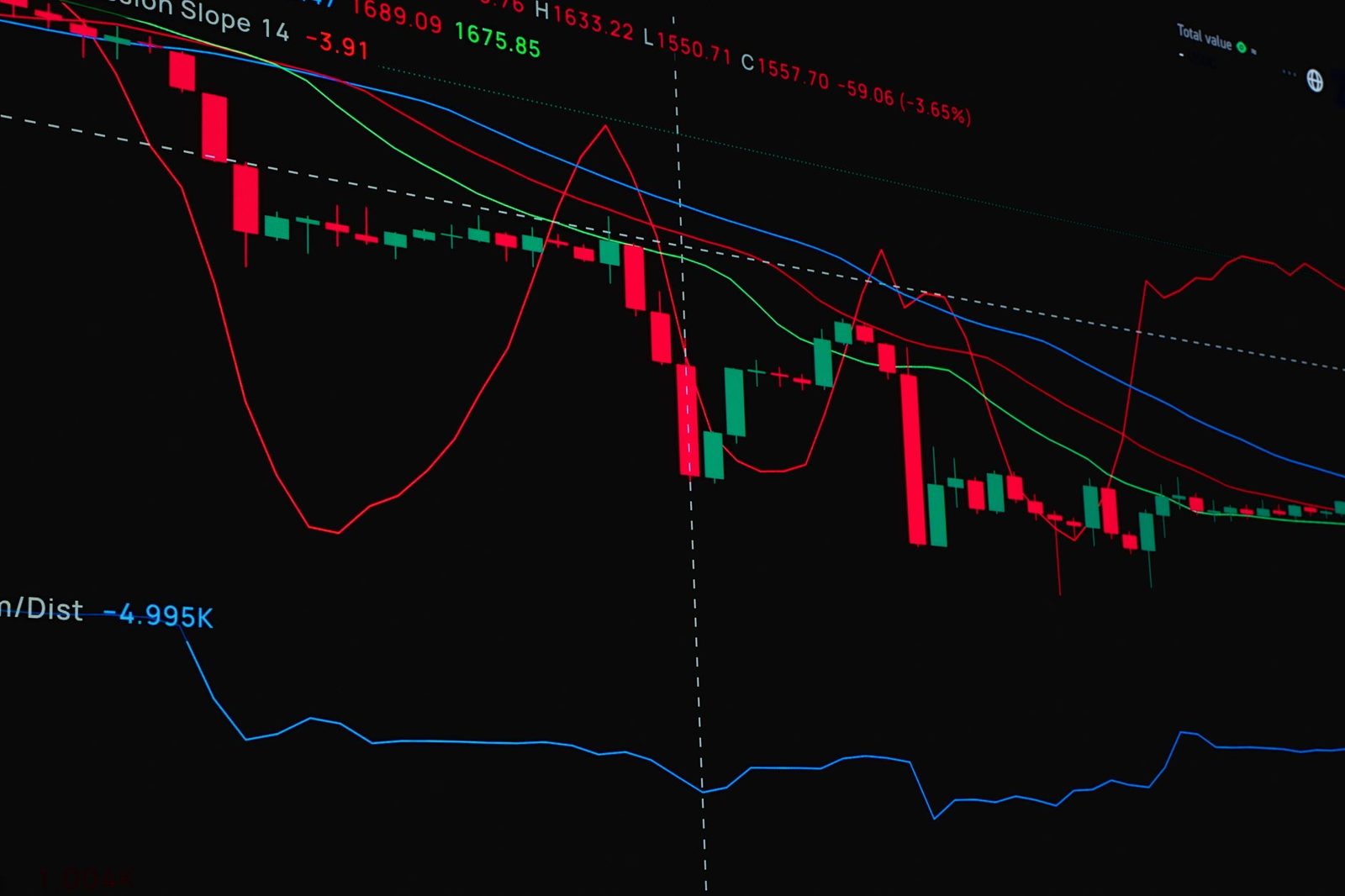
Bitcoin can move ten percent in a day. A stock rarely does that in a month. This gap is why cryptocurrency price forecasting needs its own set of tools.
AI models built for stocks often fail on crypto. The reasons are structural, not just about speed. Crypto trades all day, every day, across many exchanges. There is no closing bell and no single record of trades.
This piece looks at how AI adapts to these conditions. We cover blockchain data, cross-exchange patterns, and the limits every model faces. The goal is a clear view of what cryptocurrency price forecasting can and cannot do.
How AI Approaches Cryptocurrency Price Forecasting
Most AI price models learn from past patterns. They look at price, volume, and time. Then they try to guess what comes next.
Crypto forecasting adds new kinds of data. Models often pull in blockchain records, social media chatter, and order book depth. Order book depth means how many buy and sell orders sit waiting at each price level. This wider data set can help. But it also adds noise. More inputs do not always mean better answers.
A machine learning model for stocks might use ten years of steady data. A crypto model may only have a few years. Some tokens are brand new. This makes training harder. The model has less history to learn from.
Cryptocurrency price forecasting also has to deal with sudden rule changes. A country might ban trading. An exchange might collapse. These events do not follow past patterns. No model can predict a shock it has never seen before.
Blockchain Data and On-Chain Signals
One edge that crypto forecasting has over stock forecasting is on-chain data. This is data taken straight from the blockchain, the shared public record that logs every crypto transaction. Anyone can see every transaction, every wallet balance, and every transfer.
AI models use this open data in a few ways. They track wallet activity. Large movements between wallets can hint at future selling or buying pressure. They also track how many coins are moving versus staying still. This is sometimes called dormancy, or how long coins sit unused.
Some models watch miner behavior too. Miners are the people or firms that process and verify transactions. When miners sell large amounts of a coin, it can signal stress in that part of the market. None of these signals are perfect on their own. But combined, they give AI models more to work with than price data alone.
The IMF's work on crypto assets notes how open, traceable transaction data sets digital assets apart from older markets. This openness is a real advantage for data-driven forecasting. It does not remove the difficulty of turning that data into a reliable price call.
Cross-Exchange Patterns and Market Fragmentation
Stocks mostly trade in one main venue, with a few backups. Crypto trades across dozens of exchanges at once. Prices for the same coin can differ slightly between them, at least for a moment.
This spread of trading is called market fragmentation. It means no single feed shows the whole picture. AI systems built for cryptocurrency price forecasting often pull data from many exchanges at once. They look for patterns that show up across venues, not just one.
Cross-exchange pattern recognition tries to spot these shared signals. For example, a model might watch for the same buying pressure showing up on three exchanges within minutes of each other. That kind of pattern can carry more weight than a single-exchange signal.
But fragmentation cuts both ways. It also lets manipulation hide more easily. A large trade on a smaller, less-watched exchange can trigger price swings that spread to bigger platforms. AI models have to filter out this kind of noise, or they risk reading manipulation as a genuine market trend.
Regulators have taken note of these risks. The SEC's investor education material on cryptocurrency flags thin trading and fragmented markets as key reasons why crypto prices can be harder to read than those of listed shares.
Why Volatility Breaks Many Models: Our Analysis
Every forecasting model rests on one quiet assumption. It assumes the future will look something like the past. Crypto tests that assumption harder than almost any other asset class.
Volatility itself is one problem. Sharp, fast swings can throw off models trained on calmer periods. A model built during a quiet stretch may badly misjudge a sudden crash or rally. Liquidity is another issue. Liquidity means how easily an asset can be bought or sold without moving its price much. Many smaller tokens have thin trading. A single large order can move the price sharply. That kind of jump is hard for any model to predict in advance. New coins add a further wrinkle. A token launched last month has no long price history. AI needs history to learn from. Without it, forecasts are closer to guesswork.
Sentiment adds one more layer. Crypto prices react fast to news, tweets, and rumors. Some AI systems try to score this sentiment using text analysis. This method has value, but it also has real limits. Sentiment can flip in hours. A model reading yesterday's mood may miss today's shift completely.
Our analysis suggests the honest takeaway is this: cryptocurrency price forecasting can highlight patterns and probabilities. It cannot deliver certainty. Anyone using these tools should treat outputs as one input among many, not a verdict.
Practical Steps for Reading AI Crypto Forecasts
Investors do not need to build these models to use them wisely. A few practical habits go a long way.
- Treat AI price forecasts as a probability range, not a fixed target price, since crypto markets move fast and often surprise even well-trained models.
- Check whether a model uses on-chain data, cross-exchange data, or price alone, since the data mix shapes how well it may perform in different conditions.
- Ask how much history the model trained on, since newer coins and shorter data sets naturally support weaker predictions.
- Watch how a forecast performs across both calm and volatile periods, not just one type of market.
- Remember that no forecasting tool can price in sudden regulatory news, exchange failures, or other one-off shocks.
These steps will not turn a forecast into a sure thing. What they do is set fair expectations. That is often the missing piece when people first meet AI-driven cryptocurrency price forecasting tools.
Key Takeaways
Cryptocurrency price forecasting borrows methods from stock market AI. But it must adapt to a market that never closes, spreads across many exchanges, and offers open blockchain data that stocks simply do not have.
Blockchain records and cross-exchange patterns give AI new signals to work with. Yet volatility, thin trading, and sudden news still limit what any model can promise. The strongest use of these tools sits alongside judgment, not in place of it. Read every forecast as one signal among several. That habit will serve investors far better than chasing a perfect prediction that no model, however well built, can consistently deliver.
For more context, read How Market, Limit, and Stop Orders Work on Crypto Exchanges.
For more context, read crypto exchange security.