
A layer-2 rollup is a separate execution environment that batches transactions off-chain and posts the data — compressed, with a proof — back to Ethereum, so thousands of user transactions settle to the base chain as one. Users get layer-one security guarantees at fees that are typically a small fraction of mainnet costs, a gap that widened dramatically after the March 2024 Dencun upgrade created a dedicated data lane for rollups and the December 2025 Fusaka upgrade expanded it. Most routine activity in the Ethereum ecosystem — swaps, transfers, gaming, social tokens — now happens on rollups rather than on layer one itself.
Bitcoin Trader publishes information, not investment advice. Crypto assets are volatile and losses are possible; this is a mechanics explainer about infrastructure.
What is a rollup, structurally?
The name describes the accounting: transactions are rolled up into batches. The rollup's sequencer orders and executes transactions off-chain, producing a new state root and the compressed transaction data. Both are posted to Ethereum, where a smart contract holds the canonical state and — critically — the data. Because the data lives on layer one, anyone can reconstruct the rollup's ledger and challenge invalid state transitions: security derives from Ethereum's consensus, not from the rollup's own validators.
This is the design distinction that separates rollups from older sidechains. A sidechain has its own consensus, and if its validators fail, the ledger fails with them. A rollup's ledger is enforceable from Ethereum: the base layer is the court of record, and the rollup operator is replaceable.
What is the difference between optimistic and ZK rollups?
The two families differ in how they prove correctness. Optimistic rollups post state assertions and assume them valid for a challenge window — typically about a week — during which anyone can submit a fraud proof demonstrating an invalid transition, which rolls the state back and slashes the dishonest proposer. Withdrawals inherit the challenge-window delay; bridges and market makers provide faster exits for a fee.
ZK rollups post a validity proof — a cryptographic argument that the new state actually follows from the old — which the layer-one contract verifies. A valid proof is immediate: no challenge window, faster withdrawals, stronger compression. The trade is engineering cost: generating proofs was historically expensive and hardware-demanding, though proving systems have improved steadily. Both families run in production at scale, and the ecosystem's trajectory has favored ZK designs as proof costs fall — a technology shift, not a verdict on the optimistic deployments still carrying the largest volumes.
What are sequencers and why do they matter?
The sequencer is the operator that orders transactions — today, for most major rollups, a single operator run by the developing team. Centralized sequencing is efficient and honest-by-incentive under most conditions, but it is a real trust point: a sequencer can reorder transactions to capture value, delay inclusion, or go down, and several rollups have had multi-hour outages while their sequencer recovered. The roadmap item is shared, decentralized sequencing — multiple operators agreed by protocol — and forced-inclusion mechanisms already let users submit transactions directly through layer one if a sequencer stalls.
The professional assessment frame is a short list: who operates the sequencer, what forced-inclusion guarantees exist, what proof system secures state, and what upgrade keys can change and who holds them. Rollups differ more on these four lines than on any performance number.
How did blobs change rollup economics?
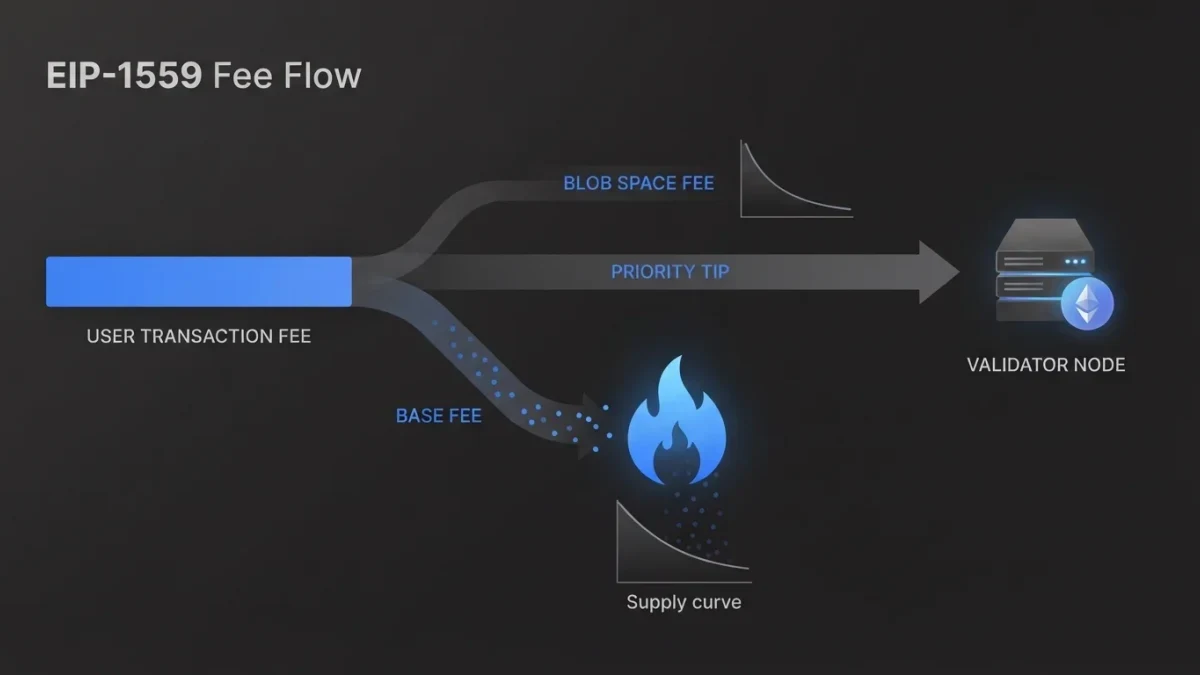
Before 2024, rollups paid for their data as ordinary Ethereum transactions, competing with everyone else for calldata space — during congestion, an L2's costs spiked with layer-one gas. Dencun's blob space gave rollups a separate, capacity-scaled market; average rollup fees fell from dollars to cents overnight and stayed there. Fusaka, activated December 3, 2025, scaled blob throughput further with PeerDAS-based data availability, cutting the per-transaction data overhead again and setting up the next capacity steps.
The economics ripple both ways. Cheap data makes more rollups viable — including application-specific ones — and pushes the marginal cost of an L2 transaction toward its own execution cost. It also concentrates fee pressure on Ethereum's base layer deliberately: the L1 fee market becomes a wholesale market for data and settlement, with retail activity retailing above it.
What are the risks specific to layer-twos?
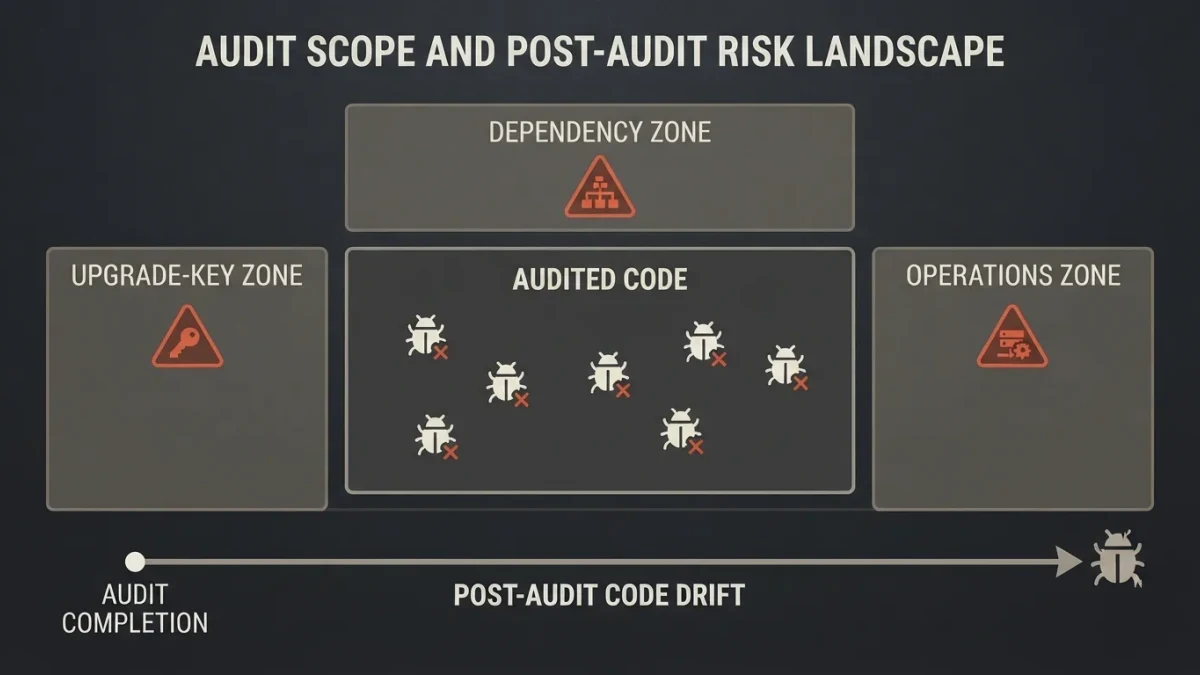
Bridge risk first. Moving assets between layers uses contracts that lock on one side and mint on the other, and bridge exploits remain among the largest theft categories in the industry's history — a compromised bridge drains every user bridged into the rollup regardless of the rollup's own security. Contract and proof-system bugs second: a bug in the rollup's verifier or its fraud-proof logic undermines the state guarantees the whole design sells. Upgrade-key centralization third: many rollups retain security-council keys that can change core contracts, a pragmatic safety valve that is also a single point of failure and governance risk.
None of these are hypothetical — each corresponds to documented incidents or near-misses across the ecosystem. The composite security of a layer-two position is therefore the minimum of the rollup's security, the bridge's security, and the base chain's, and the reader-grade habit is checking which of the three is weakest for any given deployment.
How do rollups relate to bitcoin's scaling debate?
As the industry's working answer to the question bitcoin's block-size war made famous: preserve the base layer's conservative guarantees, and scale above it. Bitcoin's Lightning and Ethereum's rollups answer with different architectures — payment channels versus general-purpose execution — but the shared thesis is settlement-layer minimalism. The contrast is instructive for what each ecosystem accepted: Lightning trades programmability for simplicity; rollups trade some operator centralization for full EVM compatibility. Scaling is not one problem with one solution; it is a family of trade-offs each chain prices in its own currency.
What are the stages of rollup decentralization?
The industry adopted a shared yardstick for how much a rollup still depends on its operator: a three-stage ladder, popularized by public tracking dashboards. Stage 0 is a full training-wheels deployment — the operator can upgrade contracts at will, the proof system is advisory, and users depend on the team's honesty. Stage 1 requires real constraints: permissionless proofs or fraud-proof participation, a bounded security council whose keys can act only on clearly defined bug windows, and forced-inclusion paths that let users exit through layer one over a stated delay. Stage 2 is the destination — only specific provable fault conditions can delay exits, the proof system is fully permissionless, and the security council's reach shrinks to genuine code defects.
The ladder matters because it converts marketing claims into checkable configurations: a rollup's stage is a property of its deployed contracts, readable by anyone, not a roadmap slide. For a user sizing risk, stage and upgrade-key exposure answer the question 'what exactly can the operator do to me' more honestly than any audit badge — and the observable history is that most major rollups spent their early years at Stage 0-1 and progressed only under competitive and community pressure, which is the process working, slowly, in public.