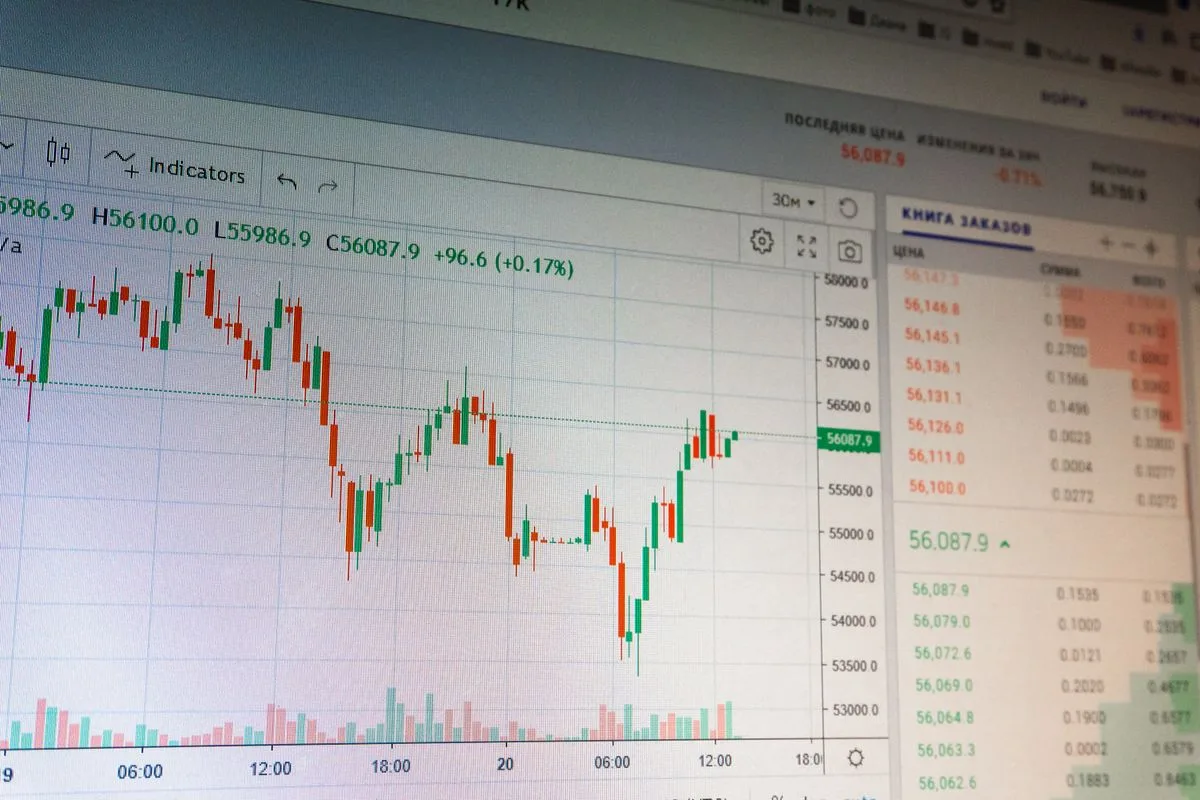

U.S. spot bitcoin ETFs absorbed $1.61 billion over four trading days through August 20, including a single-day inflow of $606.3 million led by BlackRock's IBIT, according to Farside Investors' daily flow tracker, as of August 20, 2026. The swing followed a week in which the same funds shed a combined $389.7 million, Tech Times reported.
What Triggered the Reversal in ETF Flows?
Net ETF flow is the daily balance of new shares created against shares redeemed, converted into dollars at the fund's reported price; a positive figure means authorized participants bought enough new shares to require the fund to purchase additional bitcoin, while a negative figure means the opposite. It is a proxy for net demand from the fund's buyers, not a direct measure of every market participant's activity, since large holders can also trade bitcoin outside the ETF wrapper entirely.
Farside Investors' data show four consecutive days of net inflows from August 17 through August 20, 2026, totaling $1.61 billion. BlackRock's IBIT accounted for roughly $1.09 billion of that total, with the fund alone drawing $503.0 million on August 20. Fidelity's FBTC added $64.7 million that day, Bitwise's BITB brought in $26.4 million, and Ark's ARKB contributed $12.2 million, per the same tracker.
The size of the August 20 print stands out against the fund category's year-to-date pace. Farside's cumulative figures put combined 2026 net inflows across all U.S. spot bitcoin ETFs at $53.468 billion through August 20, with BlackRock's IBIT alone accounting for $62.187 billion in lifetime inflows against Grayscale's GBTC, which has shed $27.528 billion since converting from a trust. A single day equal to more than 1 percent of the year's cumulative total is a meaningful concentration of demand in one session, though Farside's tracker does not attribute the specific buyers behind the flow.
Why Were Bitcoin ETFs Bleeding Just a Week Earlier?
The turnaround followed a rougher stretch. For the week of August 10 through 14, 2026, the same group of funds recorded $389.7 million in combined net outflows, Tech Times reported, with Fidelity's FBTC posting the largest single redemption at $153.2 million. Grayscale's GBTC, BlackRock's IBIT, Ark's ARKB, Bitwise's BITB, and Franklin Templeton's EZBC all posted outflows that week as well, according to the same report.
Tech Times linked the redemptions to selling by publicly traded bitcoin miners, citing figures showing Riot Platforms sold 4,300 BTC in the second quarter of 2026 after selling 3,778 BTC in the first quarter, part of a roughly 28,000 BTC reduction across public miners' holdings during 2026. Wintermute, a crypto trading firm, described the combination of ETF redemptions and miner sales as "a supply-side pincer" that left "the market without a strong source of fresh demand," per Tech Times' coverage of the firm's note. The firm added: "An asset that cannot rally on good news while its dedicated vehicles bleed is telling us the marginal seller is back."
Tech Times also reported that bitcoin failed to break above $65,000 during that stretch despite favorable inflation data, closing the week near $63,000, about 2.4 percent below where it opened, within a trading range of roughly $62,000 to $65,000.
What Does the Fed's Rate Decision Signal for Risk Assets?
The flow reversal also sits against a Federal Reserve that has held its policy rate steady. The Federal Open Market Committee voted 9-3 on July 29, 2026, to maintain the federal funds rate target range at 3.5 percent to 3.75 percent, according to the Federal Reserve's July 29 statement. Three members, Beth M. Hammack, Neel Kashkari, and Lorie K. Logan, dissented in favor of raising the rate by a quarter point rather than holding, the statement shows.
A steady policy rate, rather than a hike, keeps the cost of holding non-yielding assets like bitcoin unchanged rather than rising, which is one channel analysts watch when assessing appetite for risk assets broadly. The Fed's statement does not mention bitcoin or crypto markets directly, and the central bank's decision reflects its dual mandate of employment and price stability, not a judgment on any specific asset class. Market participants should treat the timing overlap between the Fed's hold and the ETF inflow rebound as a coincidence worth noting rather than a demonstrated cause, since Farside's tracker does not disclose the identity or motivation of the underlying buyers.
How Do the Two Weeks of Flows Compare?
| Period | Net flow | Largest mover | Source |
|---|---|---|---|
| Aug 10-14, 2026 | -$389.7 million | Fidelity FBTC, -$153.2 million | Tech Times |
| Aug 17-20, 2026 | +$1.61 billion | BlackRock IBIT, +$1.09 billion | Farside Investors |
The two windows sit back to back, and the size of the second week's inflow is large enough to more than offset the prior week's redemptions across the fund category, based on the figures each source reports. Neither source's data explains what changed for individual allocators between the two periods.
What Should Market Participants Watch Next?
Three data points will show whether the August 20 inflow was a one-session event or the start of a sustained shift. First, whether Farside's tracker shows continued net buying into BlackRock's IBIT beyond a single session, since the fund accounted for the large majority of the four-day total. Second, whether public miners' selling pace, which Tech Times reported at roughly 28,000 BTC reduced across public miners' holdings during 2026, continues at a similar rate or slows. Third, whether the Fed's next scheduled statement changes the current 3.5 percent to 3.75 percent target range, which would alter the backdrop against which ETF demand is being read.
None of these figures constitute investment advice, and none point to a specific price outcome. Crypto markets remain volatile, and both ETF flows and miner selling can reverse from one week to the next, as the two periods examined here demonstrate.
For a related analysis perspective, read Reading Crypto Order Books: Market Depth and Execution.
For more context, read Reading Crypto Order Books: Market Depth and Execution.