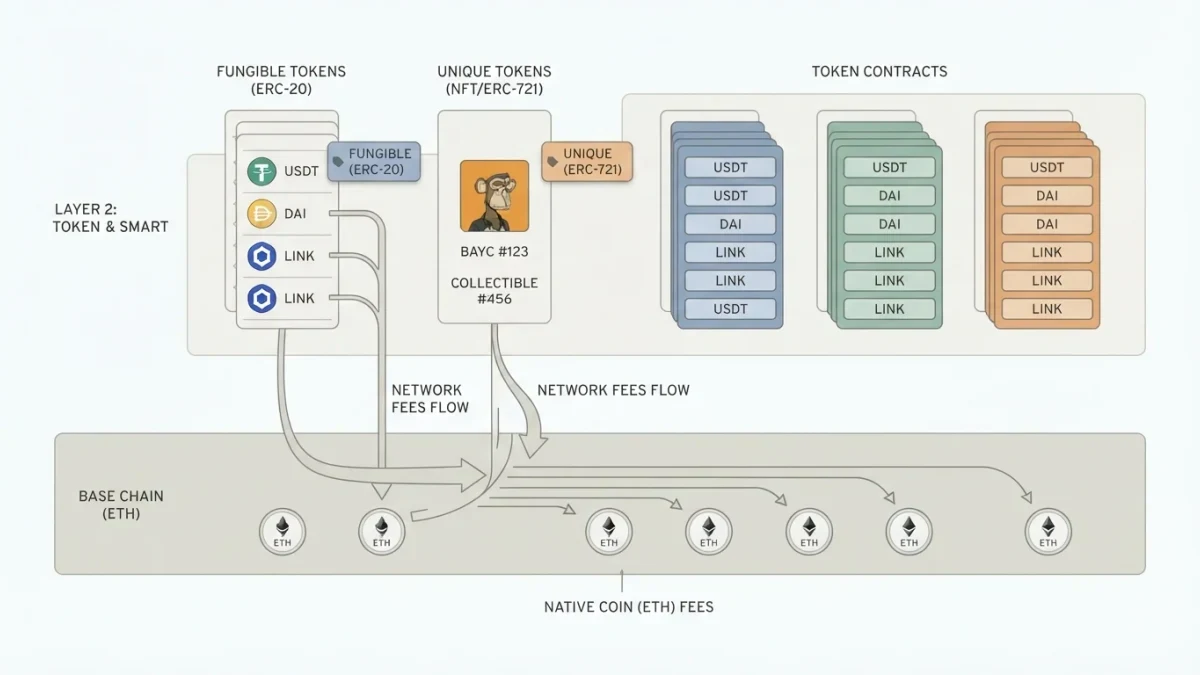

The SEC and CFTC jointly issued an interpretive release on March 17, 2026 — SEC Release No. 33-11412, with companion CFTC guidance — clarifying how federal securities laws apply to crypto assets, organized around a five-category taxonomy of tokens and naming 18 major crypto assets in its analysis. The CFTC stated it will administer the Commodity Exchange Act consistently with the SEC's interpretation, aligning the two regulators' jurisdictions on paper for the first time in a decade of ad hoc case-by-case calls.
Bitcoin Trader publishes information, not legal advice. Regulatory interpretation is a legal subject; readers with specific exposure should consult qualified counsel.
What did the release do?
It drew jurisdictional lines analytically rather than through enforcement. The release's five-category taxonomy sorts tokens by their economic function — which types of crypto assets are offered and sold as securities, and which are not, with the latter falling to commodities law under the CFTC. Eighteen major crypto assets are addressed by name in the analysis, giving issuers and trading venues concrete reference points instead of inference from settled enforcement actions. Law-firm analyses published within days — from several major firms — described it as a turning point capping a decade of shifting SEC policy.
The instrument matters as much as the content: an interpretive release does not create binding rules with the force of the CLARITY Act's statutory text, but it tells market participants how the two agencies' staffs will read the existing statutes today. Courts retain final say on the securities question in litigation; the release is the agencies committing to a position in the meantime.
Why does joint issuance matter?
Because the securities-versus-commodity boundary has been the industry's central legal uncertainty, and the two agencies have historically pulled in different directions. Under the prior enforcement-led approach, the SEC asserted most tokens were securities through case-by-case actions, while the CFTC simultaneously treated bitcoin and ether — and the derivatives markets built on them — as commodities. The joint interpretation commits both to one taxonomy, and the CFTC's companion release (press release 9198-26) says explicitly that it will administer its statute consistently with the SEC's reading.
For market structure, the practical effect is on venue design: which tokens a platform may list under which regulatory lane, and how the split between SEC-registered trading and CFTC-regulated futures and spot commodities markets maps onto specific assets. The March release complements the market-structure legislation moving through the Senate — the CLARITY Act — which would write a version of the same division into statute.
What is the market angle?
The clarification's commercial weight falls on the assets named as non-securities, which gain a cleaner path to listings, derivatives products, and institutional participation that had hesitated at unresolved status. The release also lands amid a broader rulemaking wave: the OCC had finalized its national trust bank custody rule in February and published its GENIUS Act implementation proposal on March 2 — three federal financial regulators acting within a month, which is the pattern to watch rather than any single document.
The original detail in the coverage is what the taxonomy does not do. It does not immunize stablecoins — separately regulated under the 2025 stablecoin statute; it does not bless token distributions that function as investment contracts regardless of category; and it does not resolve pending litigation retroactively. Interpretation sets the forward path; the docket still holds the past.
What should readers watch?
Three follow-ons. First, whether the five categories hold their shape as the CLARITY Act — passed by the House, marked up by the Senate Banking Committee in January 2026 — becomes law and either absorbs or overrides the taxonomy. Second, how exchanges and issuers reposition listings and product launches against the 18 named assets in the coming quarters. Third, whether courts defer to the interpretation where it collides with private litigation — the first appellate test will say more about durability than the release itself.
The release text and the CFTC's companion release are public documents; both are linked below for primary reading, and the law-firm analyses indexed within days of issuance map the taxonomy in detail.