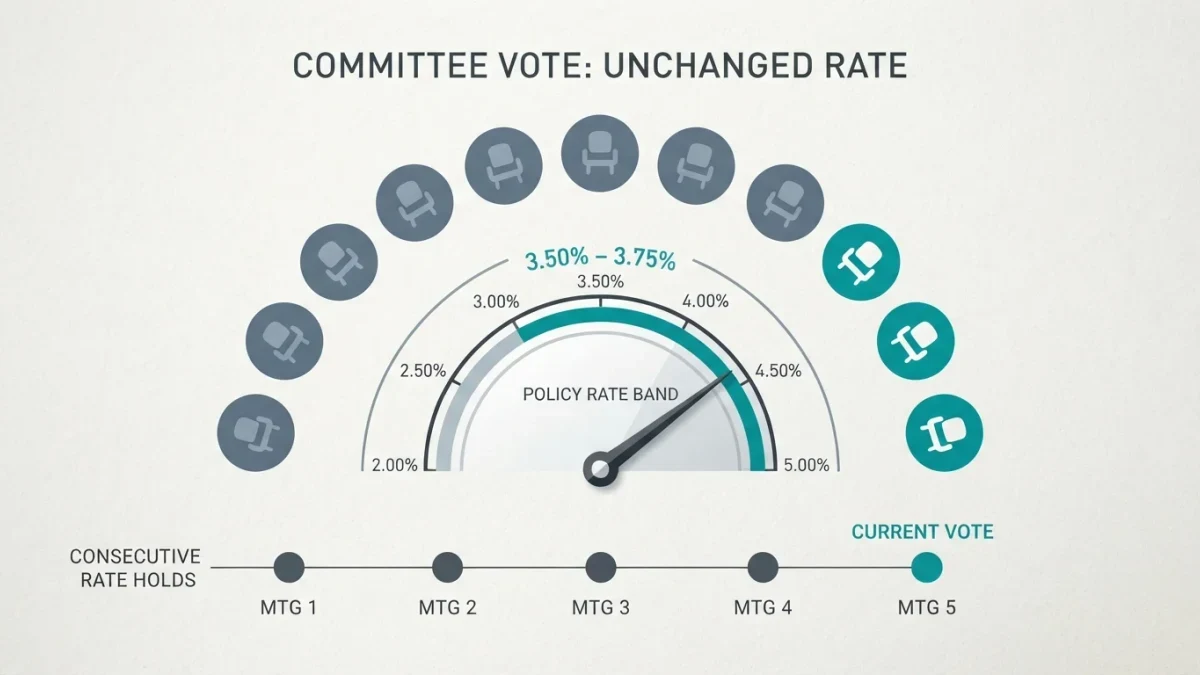

Institutional bitcoin allocation is gated by process: custody arrangements, board governance, benchmark rules and regulatory permissions all stand between a sovereign fund or pension's investment committee and its first purchase. That is why the public record of institutional arrival runs through wrappers — a U.S. state pension board's spot-ETF holdings appearing in filings in 2024, a sovereign strategic reserve established by executive action in March 2025 — rather than through wallets. The wrappers are not a preference; they are the institutions' rules wearing market structure.
Bitcoin Trader publishes information, not investment advice. Institutional processes are described as structure, not as any allocation's merit.
What gates stand before an institutional bitcoin position?
Four, in rough order of difficulty. Custody: a fiduciary institution needs qualified custody — regulated trust structures, audited controls, insurance arrangements — because self-custody is not a fiduciary option at scale. Governance: an investment policy statement naming the asset class, its benchmark and its risk budget, each change requiring committee or board approval on quarterly timelines. Benchmark and mandate fit: a fund benchmarked against bonds or global equities cannot justify an unbenchmarked position without amending the mandate — the reason ETF wrappers, which slot into existing equity-vehicle operational rails, crossed the line first. And accounting: fair-value treatment of bitcoin flows through earnings, which for corporate and public-fund reporting adds volatility that boards must formally accept.
The gates explain the sequencing. Spot ETFs cleared custody and operational gates by construction — existing brokerage custody, existing settlement rails — which is why pension filings showed ETF positions years before any direct-holding discussion matured. Direct custody at institutional grade exists, but each fund adopting it rewrites policy documents that were built without the asset class in mind.
What does the public record show so far?
Three layers of participation, each documented. Corporate treasuries — the earliest and most volatile layer, whose 2025 boom and 2026 stall this site has covered in detail. Public filings by pensions and institutional managers: the 2024 appearance of a state pension board's spot-bitcoin-ETF holdings in quarterly filings marked the category's quiet arrival into fiduciary portfolios — small positions, but through the front door. And sovereign exposure: El Salvador's multi-year accumulation, and the U.S. executive action of March 2025 establishing a strategic bitcoin reserve capitalized with forfeited coins — a policy event that moved the sovereign question from whether to how.
The honest reading of scale: public institutional exposure remains a small fraction of the asset's market capitalization. The gates that held it back for a decade — custody, regulation, benchmark fit — have each been addressed in form between 2024 and 2026: ETFs, the stablecoin and market-structure statutes, OCC custody rulemaking. Form is not adoption; it is the precondition for adoption, and the pace through the gates is set by committees, not markets.
How do institutions actually size such a position?
Through the same machinery as any alternative allocation. Risk-budget frameworks ask what the position adds to portfolio variance at candidate weights — and bitcoin's volatility arithmetic argues for small weights having meaningful impact, which cuts both ways: a one-to-two-percent allocation moves a portfolio's risk profile materially, and that fact itself slows committees. Liquidity analysis stress-tests exits against the asset's drawdown history. And operational due diligence — the least glamorous gate — audits the entire chain: custodians, counterparties, reporting, incident procedures.
What committees cannot do is what retail does: act on narrative within a week. The same governance that made institutions late to every prior asset class — equities in emerging markets, high yield, private equity — is operating here, and the base rate of that history is that late arrival, once begun, runs for decades rather than quarters.
What is the angle other coverage skipped?
That the sovereign and pension story is now a rulemaking story, not a sentiment story. The SEC-CFTC interpretation of March 2026 defined the asset-class boundaries; the OCC's custody rulemaking wrote the bank path; the GENIUS and CLARITY frameworks built the statutory floor. Each document is a gate being unbolted in sequence — and the pace of institutional flow, which the market reads as conviction or its absence, is actually paced by these documents' effective dates and compliance clocks. Sentiment surveys ask whether allocators are interested; the filings show the machinery that decides when interest can execute.
The second angle is concentration risk at the sovereign layer. A sovereign holder does not trade; it accumulates and holds — removing float permanently. Strategic-reserve policies, wherever adopted, convert market supply into policy inventory, a structural change to the supply curve that price-flow analysis is still learning to model.
What should readers watch?
Disclosure documents, as always: the 13-F filings where institutional ETF positions surface quarterly; the policy documents and statutes where custody and market-structure rules bind; and the committee minutes of large public funds, which are public records in many jurisdictions. Institutional bitcoin has moved from whether to through-what-gate — and the gates, not the headlines, keep the calendar.
What do quarterly filings reveal, and when?
The institutional equities window is the 13-F: managers exercising investment discretion over U.S. equities above a size threshold must file quarterly holdings reports with the SEC within forty-five days of quarter-end. Spot bitcoin ETFs are exchange-traded equity-vehicle products, so institutional positions in them surface in these filings — which is how the first state pension board's bitcoin exposure became public knowledge, and how pension funds, endowments and sovereign-adjacent managers have been tracked into the asset since.
The tool's limits define its use. Filings are forty-five days stale on arrival — a snapshot of December's book read in mid-February. They show positions, not intentions, and say nothing about hedges or derivatives overlays that may modify exposure. And they capture only the U.S. equity-wrapper channel: a sovereign fund holding coins directly, or exposure through offshore vehicles, is invisible to the form. Read correctly — directionally, slowly, as a census of wrappers rather than a measure of conviction — the quarterly cycle is still the single best public instrument for watching the institutionalization trend, one forty-five-day-delayed print at a time.