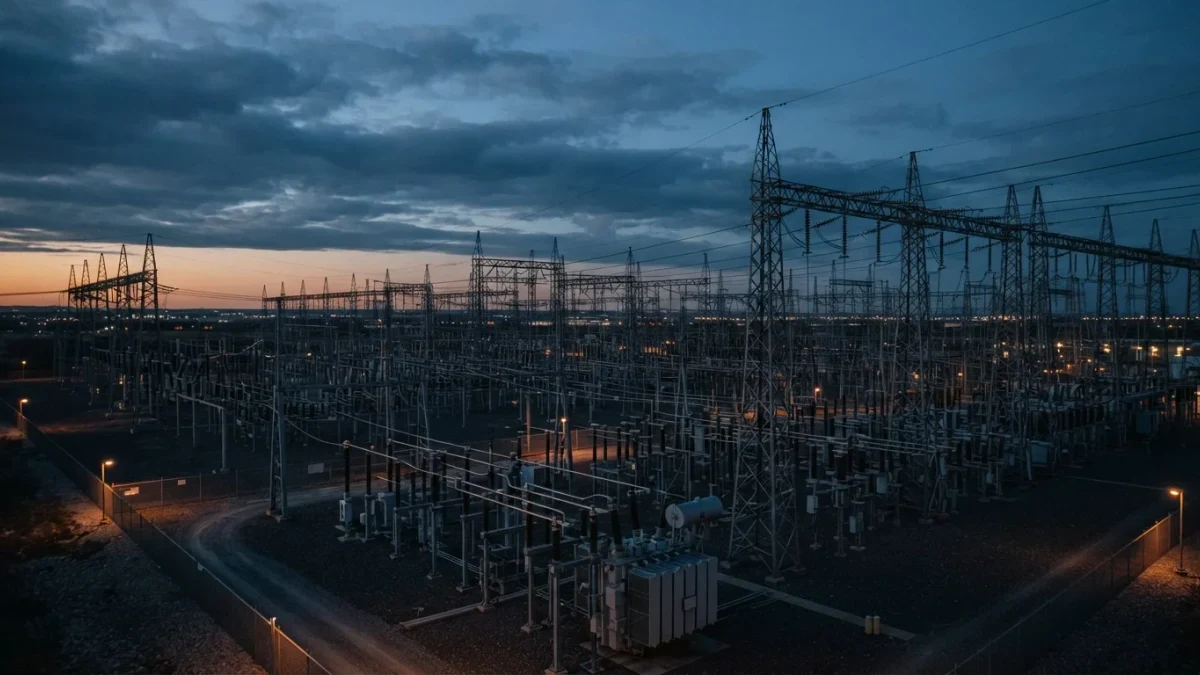
Every bitcoin transaction competes for limited block space, and the mempool — the public waiting room of unconfirmed transactions — is where that competition happens. Miners fill each block with the transactions offering the highest fee per unit of data, measured in satoshis per virtual byte; in quiet times the queue can be near-empty, while in congestion it has swollen past several hundred thousand transactions.
Bitcoin Trader publishes information, not investment advice. Crypto markets are volatile and losses are possible; fee mechanics are protocol facts, not trading signals.
What is the mempool?
The mempool is short for memory pool: the set of valid, unconfirmed transactions each full node has seen and is holding in memory. There is no single global mempool — every node keeps its own, and the contents differ slightly based on connectivity and local rules such as minimum fee thresholds for what to accept and relay.
When a wallet broadcasts a transaction, it propagates node to node across the network within seconds. It then sits in mempools until a miner includes it in a block, or until the node drops it for paying too little during sustained congestion. Block explorers that show mempool size and fee-rate histograms are aggregating many nodes' views, which is why their numbers differ slightly from each other.
How do miners choose which transactions to include?
A block is limited to four million weight units of data, and a typical transaction occupies a few hundred virtual bytes depending on the number of inputs and outputs. Because space is fixed, miners solve a knapsack problem: maximize total fees by preferring the highest fee rate, satoshis per virtual byte, first.
The practical consequence is that size, not amount, drives cost. Moving 50,000 dollars of bitcoin in one input and two outputs can cost less in fees than consolidating a wallet built from years of small incoming payments, because dozens of inputs bloat the transaction's data footprint regardless of the value moved.
Why do fees spike so sharply?
Demand for block space is bursty — 144 blocks a day, each a few megabytes of capacity — while supply of block space is perfectly inelastic. Auctions for a fixed daily quota clear at whatever price demand sets. In April 2024, around the halving, bidding was so intense that fee income for one block briefly exceeded the 3.125 BTC subsidy itself, a reminder that fees are a live market rather than a fixed toll.
Spikes unwind through both price and patience. As fee rates rise, low-value and non-urgent transactions stop broadcasting, and wallet software raises its suggested rates. Once the backlog clears, the next epoch of senders pays less — the mempool functions as a visible, self-clearing queue.
What are replace-by-fee and child-pays-for-parent?
Two protocol tools let users manage a stuck transaction. Replace-by-fee (RBF), defined in BIP 125, allows the sender to re-broadcast the same transaction with a higher fee as long as the original signalled replaceability; miners then have a pure economic reason to prefer the replacement.
Child-pays-for-parent (CPFP) attacks the same problem from the receiving side: the recipient of the stuck transaction spends that unconfirmed incoming coin in a new transaction carrying a large fee. A miner wanting the child's fee must also include the parent, so the pair clears together. Exchanges use CPFP routinely to free up customer withdrawals during congestion.
How should a wallet set a fee?
Wallets estimate fees from recent blocks and current mempool composition, then offer tiers — roughly, a high-confidence-in-the-next-block rate, a next-few-blocks rate, and an economy rate that can wait hours. The right tier depends on urgency, and the honest description of the economy tier is that delivery time is unbounded during congestion.
Two habits avoid most fee regret. Batching outgoing payments into one transaction cuts the per-payment data cost, and consolidating small inputs into one output during cheap periods prevents a wallet from becoming expensive to spend from later. Neither trick changes the auction; both change the bidder's footprint inside it.
How do big services behave during congestion?
Watch what exchanges do, because they operate at a scale that makes fee behavior visible. During spikes, exchanges batch withdrawals — combining hundreds of customer payouts into single transactions, where the fixed per-transaction overhead is paid once instead of hundreds of times, and customers share the data cost of the common inputs. Batch processing trades immediacy for efficiency: withdrawals queue and clear on schedules the exchange publishes, and the fee saving is the compensation for waiting.
Services on the receiving side use CPFP, as described above, to free customer deposits. Services on the sending side use RBF to unstick batches that underpaid. The mempool thus has a professional tier whose behavior is predictable from incentives — and whose tooling is one reason congestion episodes clear as fast as they do: the participants who move the most volume are also the ones best equipped to manage their footprint cheaply.
What is mempool policy, and why do nodes disagree?
Each node decides what it keeps in its mempool: a minimum fee rate below which transactions are not stored or relayed, a maximum mempool size, and eviction rules when the size limit is hit — typically dropping the lowest-fee-rate transactions. These are local policies, not consensus rules: nothing is invalid about a low-fee transaction; nodes simply decline to volunteer resources storing it. The practical consequence is that the mempool is not one queue but a family of queues with slightly different membership, and a transaction's confirmation prospects depend on which subset of the network is holding it.
The disagreement is healthy and load-bearing. It caps the network's memory cost — no node is obliged to queue unbounded garbage — while letting wallets and miners negotiate through fee rates. Readers comparing mempool statistics across block explorers will notice small discrepancies for exactly this reason, and the correct interpretation of any explorer's queue depth is 'what this explorer's node sample is holding,' not a global fact.
Can the fee market be attacked?
Yes, and the documented pattern is spam: flooding the mempool with high-fee-rate, low-value transactions to force genuine users to overpay. The 2023-2024 congestion waves showed what sustained spam costs and accomplishes — fee rates spiked, wallets paid more, and the attacker burned substantial bitcoin in fees to maintain the pressure. The attack is expensive by construction, since every spam transaction must outbid real demand to occupy block space, and it ends when the attacker's budget does.
The mitigations are the market's own: fee estimation adapts, low-priority activity defers or moves to layers, and the attacker's fees flow to miners — subsidizing the very security the attack targets. The episode-level lesson for readers is that fee spikes are not always organic demand; checking whether spiked fee blocks contain thousands of near-empty transactions is the tell that separates congestion from spam.
Do high fees mean the fee market is broken?
They mean it is working, uncomfortably. Block space is scarce by design, and scarcity prices the marginal user out first — small payments migrate to layers built on top of Bitcoin, of which Lightning is the most used, while settlement-grade transfers remain on the base chain. The open economic question, examined since the earliest halvings, is whether long-run fee income will be large enough to sustain mining security once the subsidy shrinks to rounding error. That question is unresolved; the queue-clearing mechanics described here are not.