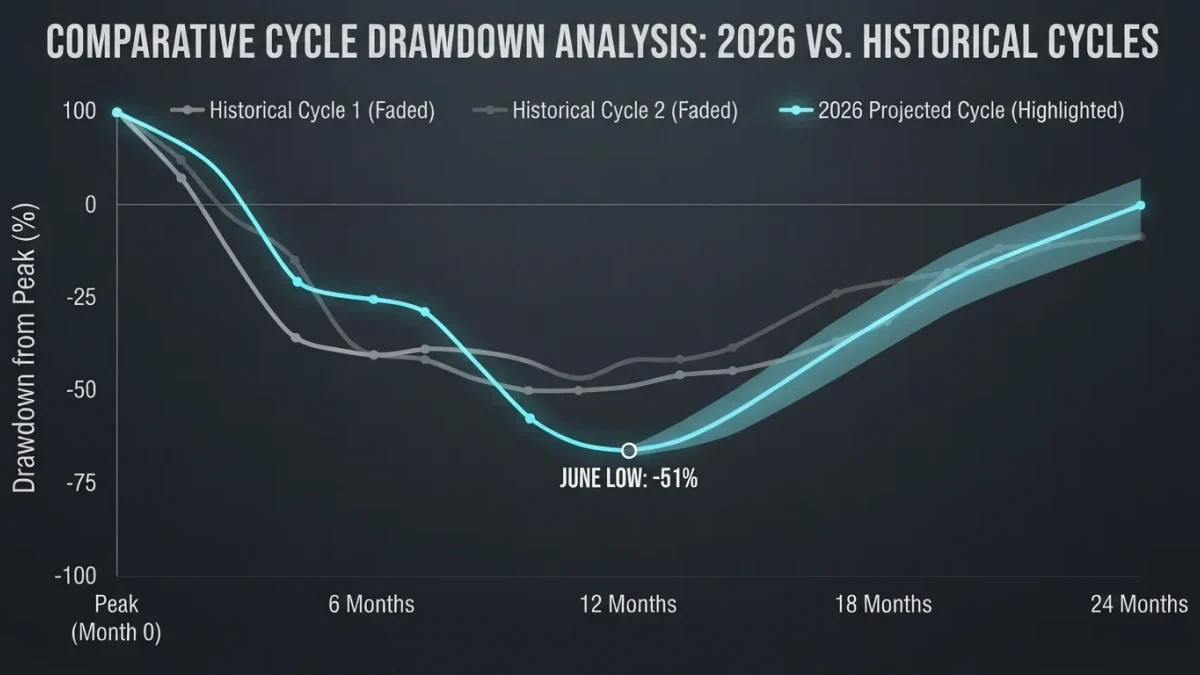
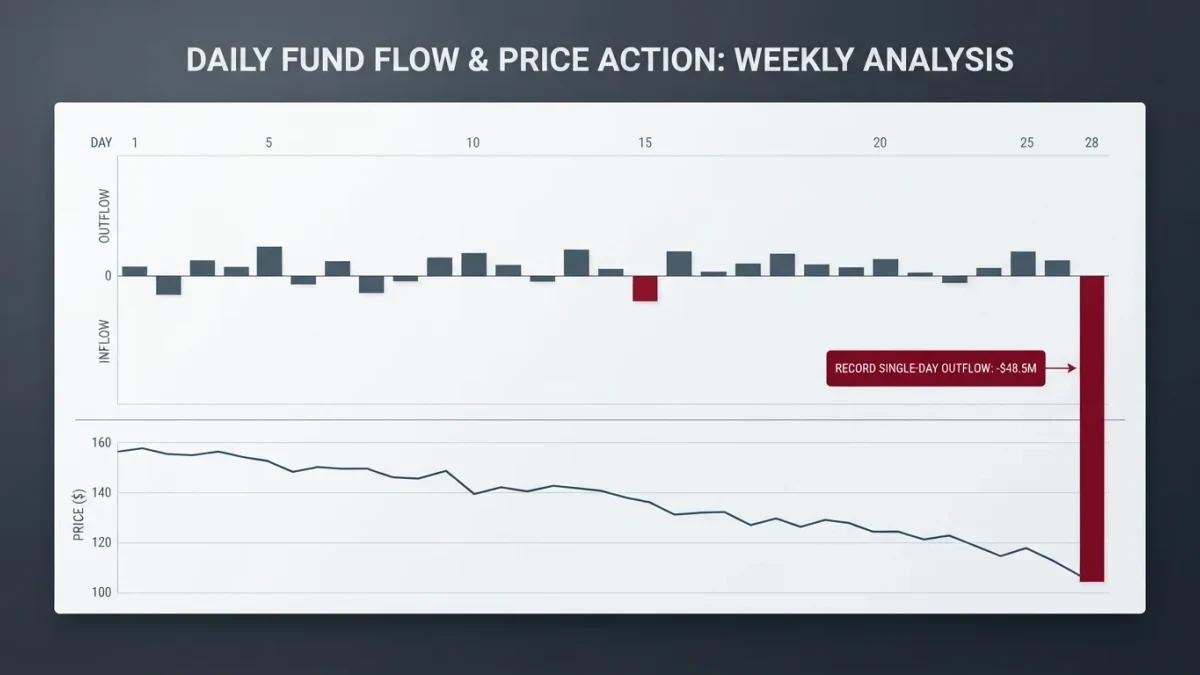
Investors pulled 528.3 million dollars from BlackRock's iShares Bitcoin Trust on January 30, 2026 — the fund's largest single-day outflow since its January 2024 launch, per CoinDesk's ETF-flows tracker. The redemption coincided with bitcoin trading near 81,000 to 85,000 dollars on January 29, a ten-month low after a month-long slide that had already taken the price below 91,000 dollars in early January.
Bitcoin Trader publishes information, not investment advice. Crypto markets are volatile and losses are possible; past flows do not predict prices.
What happened?
January built toward the redemption in stages. Bitcoin began the year under pressure, slipping beneath 91,000 dollars in the first week as demand for leveraged longs unwound; by January 29 it had touched roughly 81,000 to 85,000 dollars — its weakest level in about ten months, per CoinDesk reporting. The following trading day, IBIT — the largest spot bitcoin ETF by assets and inflows — logged the 528.3-million-dollar redemption, the biggest of its existence to that date. The pattern was broad as well as deep: outflows hit the U.S. spot ETF category as a whole that week, per CoinDesk's aggregated tracker data.
Notably, the same week carried a countervailing signal from the corporate side: Strategy, the largest corporate bitcoin holder, disclosed a 2.13-billion-dollar purchase over eight days on January 20, per Reuters — institutional demand splitting between ETF sellers and a buying treasury company in the same month.
Why does a single fund's outflow matter?
Because IBIT's size makes its flows a market factor in themselves. The fund absorbed a disproportionate share of all spot-bitcoin-ETF inflows since launch, meaning its shareholder base now represents one of the largest pools of bitcoin exposure in the world. When that base redeems, the fund's authorized participants sell bitcoin to meet creations running in reverse — flow mechanics that link shareholder sentiment directly to spot-market liquidity.
ETF redemption is also unusually fast. The creation-and-redemption architecture — the mechanism the SEC approved and that filings describe in detail — settles shares into bitcoin sales with same-day efficiency. A 528-million-dollar day is the system working as designed; what the size marks is how much of the market now moves through that door.
What is the deeper angle?
The outflow's timing relative to the price low is the detail other coverage compressed. The record redemption did not precede the drawdown — it followed the ten-month low by a trading day, meaning shareholders were selling after the fall, not before it. That sequencing is the signature of capitulation-style flow rather than anticipatory hedging: the largest single-day exit in the fund's history arrived when the pain was already visible, not at the highs.
The second angle is what the record number says about the ETF era's structure. In the pre-ETF market, a comparable sentiment swing was distributed across exchange balances and cleared opaquely. Now a material share of it is printed in a daily, publicly aggregated, fund-by-fund flow number — a transparency gain that also concentrates attention: one fund's worst day is legible to every participant by the next morning, which is itself a mechanism the market did not have in prior cycles.
What should readers watch next?
Whether outflows persist or exhaust. Category-wide flow data, published daily by trackers aggregating issuer disclosures, shows redemptions clustering either around specific macro prints — the January slide coincided with a repricing of Fed expectations — or exhausting once positioning has washed out. The fund-level detail worth checking is concentration: whether redemptions are broad-based across ETF holders or concentrated in a few large authorized-participant channels.
The structural questions the episode raises are permanent regardless: how the market's newest, largest holder base behaves in its first sustained drawdown, and what that behavior does to liquidity when the next one arrives. January 2026 was the first sizable test; the record it set is a data point, not a ceiling.