Bitcoin mining is the process by which networks of specialized computers compete to append the next batch of transactions to Bitcoin's shared ledger. The miner whose machine finds a valid block currently receives 3.125 BTC in new bitcoin plus all transaction fees in that block, a subsidy rate that has stood since the April 2024 halving cut it from 6.25 BTC.
Bitcoin Trader publishes information, not investment advice. Crypto markets are volatile and losses are possible; nothing in this explainer is a recommendation to mine, buy, or sell anything.
What problem does mining actually solve?
Mining solves the double-spending problem for a network with no central operator. Each mining machine takes a candidate block's header data and repeatedly hashes it with SHA-256, changing one field — the nonce — on every attempt, trillions of times per second. The network accepts a block only if its hash falls below a target value set by protocol. Finding such a hash is pure trial and error, so the winner is effectively chosen by lottery where tickets are bought with computation.
The economics follow from the mechanics. A hash below target is rare, costly to produce, and trivial for everyone else to verify — one more hash operation per node. That asymmetry is what lets thousands of independent machines agree on one transaction history without trusting each other.
What is inside a mined block?
A block is a small data structure with two parts. The header carries the hash of the previous block, a Merkle root that commits to every transaction in the block, a timestamp, the current difficulty target, and the nonce. The body is the ordered list of transactions, capped at roughly four million weight units.
The first transaction in every block is the coinbase transaction, created by the winning miner. It has no input and pays the block subsidy — 3.125 BTC since April 2024 — plus the fees attached to all included transactions. This is the only mechanism by which new bitcoin enters circulation, which is why the protocol's 21 million coin cap is enforceable: no coin can exist that was not first printed in a coinbase transaction.
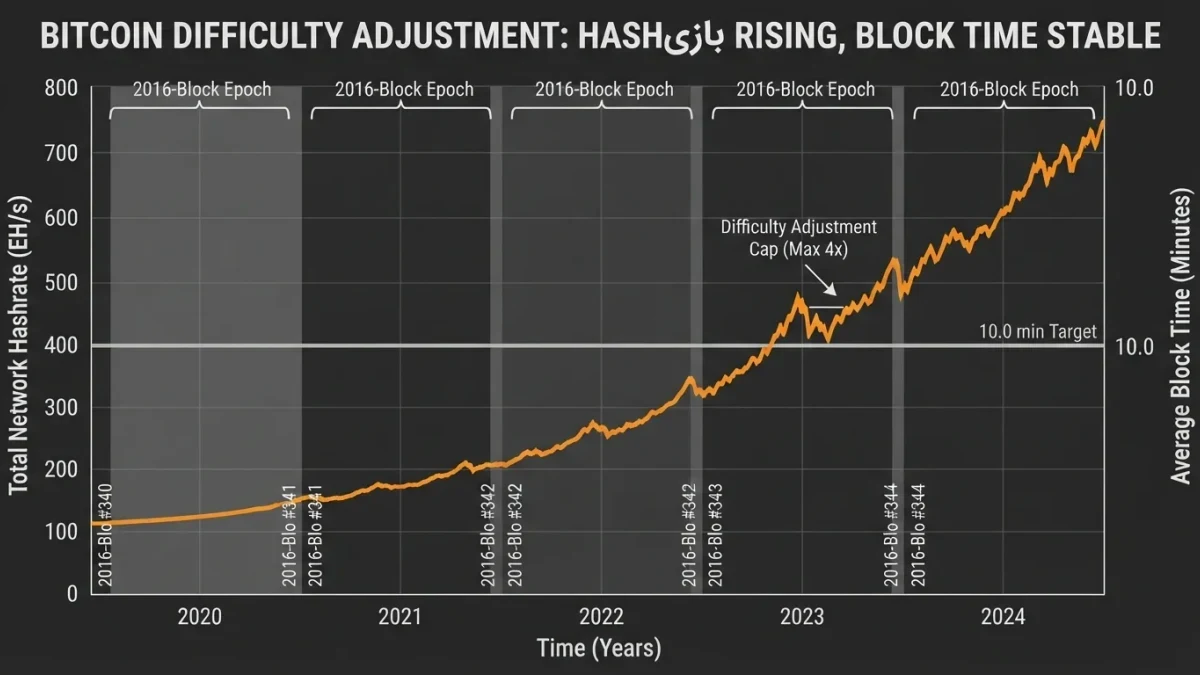
Blocks arrive on average every ten minutes, but the interval for any single block is random. Ten minutes is the long-run average the difficulty adjustment holds the network to.
How much computing power does mining use?
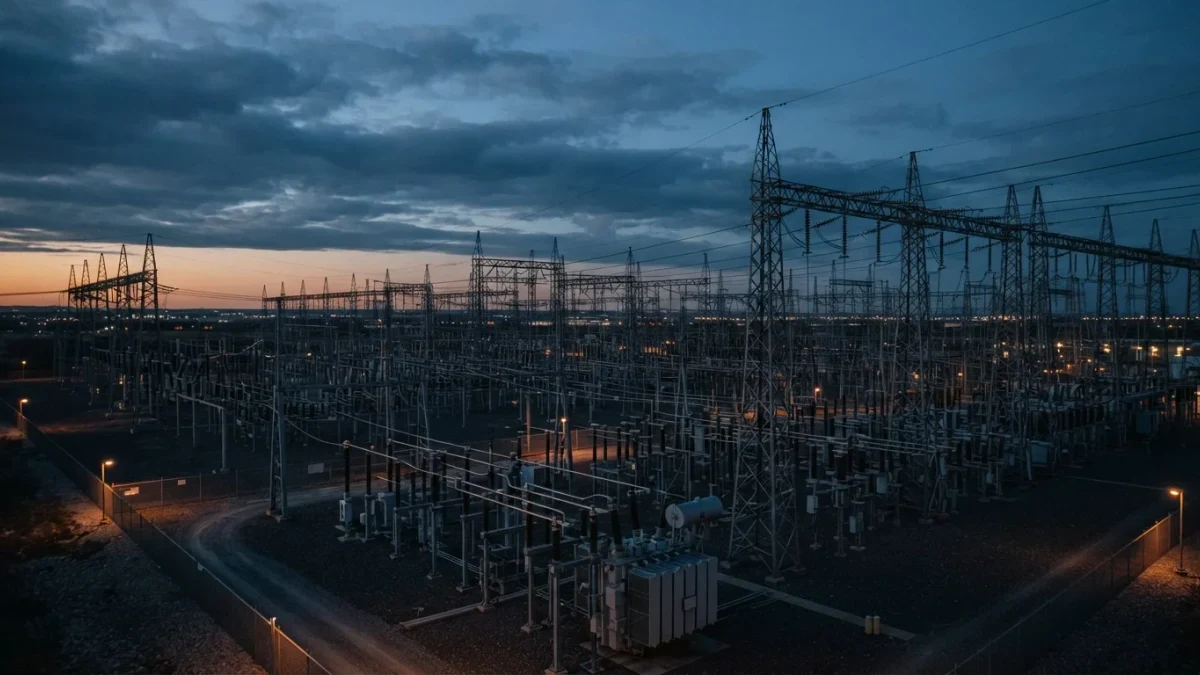
Network power is measured in hashrate — the number of SHA-256 attempts per second across all miners. By late 2025 the Bitcoin network operated in the hundreds of exahashes per second, where one exahash is a quintillion attempts. Each exahash represents industrial quantities of electricity, because a mining machine earns nothing when its hashes do not win a block.
In the United States, the Energy Information Administration began collecting operator-level data on cryptocurrency mining electricity use in 2024, after industry surveys showed mining concentrated in states with cheap power. Exact consumption figures shift with hashrate and machine efficiency, so any quoted number should carry its as-of date. What is stable is the direction: more hashrate means more energy spent, by design.
How do miners get paid?
Miner revenue has two components: the subsidy, which halves every 210,000 blocks, and fees, which fluctuate with demand for block space. The schedule is fixed by consensus rules.
| Era start | Block subsidy |
|---|---|
| Genesis, 2009 | 50 BTC |
| Halving, 2012 | 25 BTC |
| Halving, 2016 | 12.5 BTC |
| Halving, 2020 | 6.25 BTC |
| Halving, April 2024 | 3.125 BTC |
| Next halving, expected 2028 | 1.5625 BTC |
Fees are the variable part of the paycheck. In quiet periods fees have covered a small share of revenue; in congested periods they have briefly rivalled the subsidy itself. Because the subsidy halves while hardware and electricity costs do not, fee market dynamics are the long-term question mark over mining economics — a structural issue, not a price forecast.
Most miners do not mine alone. Mining pools aggregate hashrate from thousands of machines and split rewards by contributed work, smoothing income from a lottery into a wage-like stream. Pool concentration is a recurring research topic because a single pool approaching a majority of hashrate would weaken the guarantees proof of work provides.
Why does proof of work make history expensive to rewrite?
To replace a confirmed block, an attacker must produce an alternative chain with more cumulative work than the honest chain — not just repeat one hash, but redo all the mining since that block, faster than the entire honest network. The cost of that attack scales with hashrate and electricity prices, which is why depth in the chain is treated as settlement assurance.
This is also why confirmation counts matter for large transfers: each additional block multiplies the work an attacker would have to redo. The system never declares a transaction absolutely final; it makes reversal progressively ruinous, which in practice is the standard the largest exchanges apply before crediting deposits.
Can anyone start mining bitcoin?
Technically yes — the software is open and permissionless. Economically, industrial scale has priced out casual mining. A single modern ASIC costs thousands of dollars, and residential electricity rates rarely clear the break-even line when competing against fleets sited next to cheap power. Hobbyists who mine at a loss usually do it to learn the mechanics or to earn small amounts of bitcoin without passing through an exchange, accepting that hardware may never pay for itself.
The competitive endpoint is structural: wherever mining profit exists after electricity, capacity expands until margins compress. Miners are price takers in hardware, power, and bitcoin, and the difficulty adjustment guarantees the network keeps its ten-minute rhythm regardless of how many machines join.
How do mining pools divide the work and the pay?
Pools solve a variance problem. A solo miner holding a fraction of a percent of network hashrate might wait years between blocks — a lottery with astronomical odds and an unbankable payout schedule. The pool aggregates thousands of machines, mines as one participant, and splits each block's subsidy and fees among members in proportion to the work they contributed.
Contribution is measured in shares: partial hash solutions below the network target but easy for the pool to verify. Your machine's share count over the shift becomes your slice of the reward. Payment schemes differ in who bears the luck: pay-per-share arrangements pay a fixed rate per share regardless of whether the pool finds blocks — the operator absorbs variance, usually for a higher fee — while pay-per-last-N-shares schemes pay from actual block finds, so miners absorb the luck alongside the pool. Either way, the household miner's economics improve from a lottery ticket to a wage-like stream, which is why nearly all mining above hobby scale runs through pools.
The governance shadow of pooling is concentration. If a handful of pools coordinate, they could censor transactions or attempt reorganizations, even though no pool controls hardware outright — miners can and do redirect hashrate between pools within minutes when a pool misbehaves, a discipline the industry has exercised publicly a few times. The monitorable numbers are published continuously: each pool's share of blocks found, and the concentration of the top pools, which is the metric to watch rather than the count of individual miners.