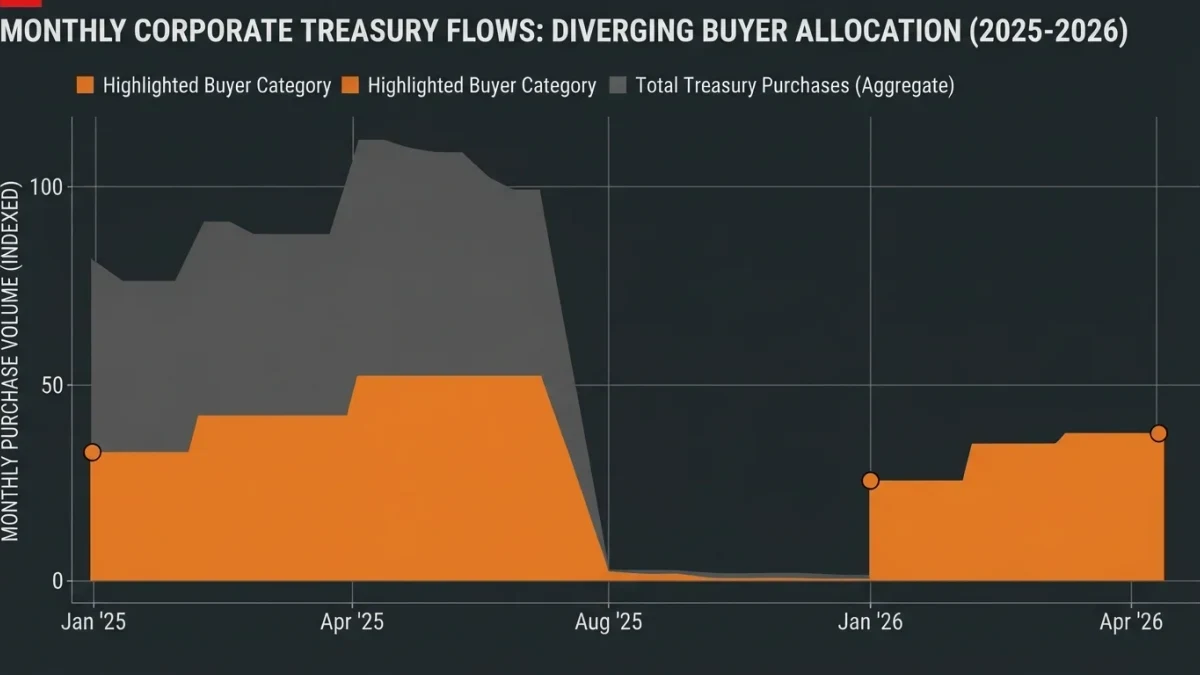
Purchases of bitcoin by corporate treasury companies have dropped 99 percent from their August 2025 high, per CNBC reporting published March 27, 2026 — and nearly all of what remains is one buyer. Strategy, the largest corporate bitcoin holder, has accelerated through the same period, adding 2.13 billion dollars of bitcoin in eight days in January and 34,164 BTC for roughly 2.54 billion dollars at an average of 74,395 dollars in its April 20 disclosure, per its own purchase ledger and Reuters reporting.
Bitcoin Trader publishes information, not investment advice. Nothing here assesses any company's securities; corporate treasuries are business decisions readers can evaluate from filings.
What happened to the treasury-company wave?
2025's cohort boom minted dozens of public companies copying Strategy's model — issue equity or convertible debt, hold the proceeds in bitcoin, let the market price the wrapper. The wave peaked in August 2025 by aggregate purchase size, per CNBC's data, and has since collapsed to about one percent of that rate. The mechanics of the unwind are structural rather than mysterious: the wrappers priced at premiums to their bitcoin holdings, the premiums compressed as the model became commoditized, and the equity-issuance machine that funded purchases works only while the premium holds. When the funding window closed, so did the buying.
Strategy sits apart for reasons of scale and sequence: first mover, the largest holdings, the deepest track record of issuing across market cycles — and, as CNBC put it, it is accelerating while rivals sit on the sidelines.
Why does one buyer matter to a market?
Size, and the shape of the demand curve. With the treasury cohort's aggregate buying down 99 percent, the marginal corporate bid in the market is effectively a single firm's schedule — concentrated where ETF flows, the other institutional channel, were net sellers through parts of the spring. Purchase concentration cuts both ways: while the buyer is buying, it is a visible floor under accumulation; if its issuance economics change, the market loses its largest corporate bid at once.
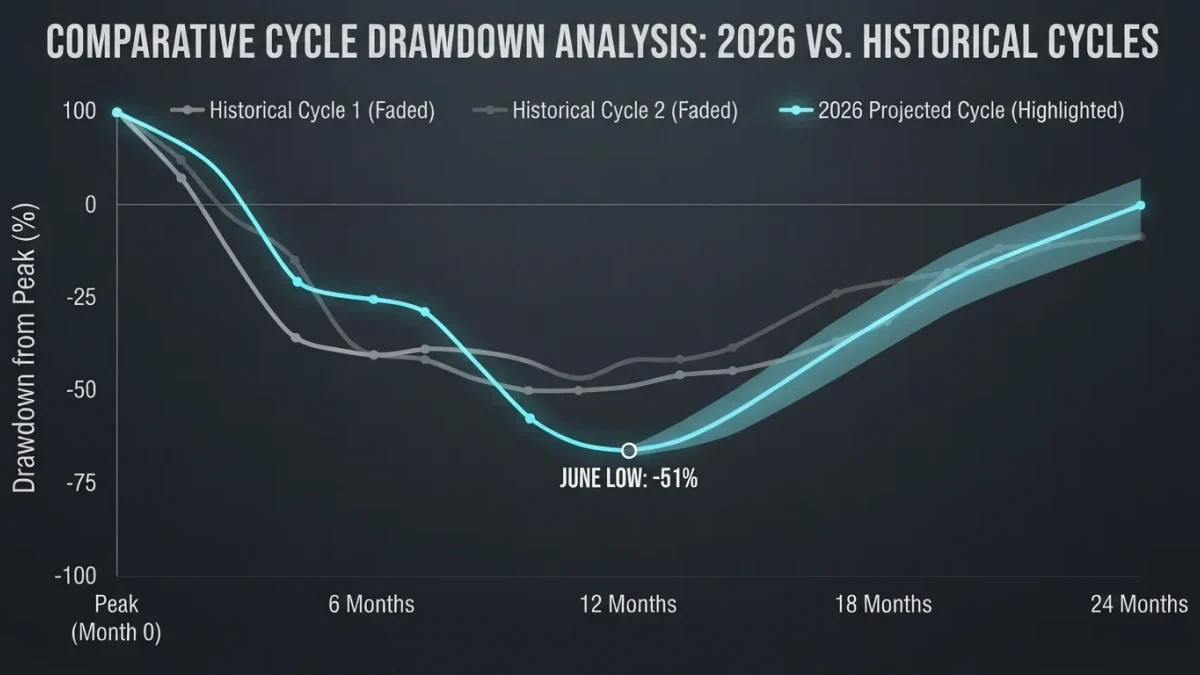
The company's own disclosures make the pattern unusually legible. Strategy publishes a transaction-level purchase ledger, so the market can verify each tranche — timing, size, average price — against the headlines. April's 34,164-BTC purchase at an average of 74,395 dollars per coin, disclosed April 20, came with the market trading well below its January levels: buying that continued through a drawdown, not only into strength.
What is the angle other coverage skipped?
The divergence between the sector's narrative and its flows. The treasury-company model entered 2026 with a roster of imitators and a story of diversified corporate adoption; the purchase data show the adoption was one firm deep. That divergence matters for how the market interprets corporate-demand headlines going forward: an announcement from the category is no longer evidence of category buying — the receipts now concentrate in a single ledger.
The second angle is the interaction with ETF flows. January set IBIT's record daily outflow while Strategy bought 2.13 billion dollars in the same month — two institutional channels moving opposite directions simultaneously, a pattern that makes 'institutional demand' a useless phrase without naming which institutions, in which wrapper, on which day.
What should readers watch?
The company's own weekly cadence of disclosures, the share-count and debt terms behind each purchase window, and — for the sector — whether any wrapper other than the original regains an issuance premium. The treasury thesis's durability is an equity-market question wearing a bitcoin costume: purchases continue while the funding engine runs, and the funding engine runs while the premium persists.
Primary sources for the flows are Strategy's published ledger and CNBC's aggregated sector data; the Reuters report of January's eight-day, 2.13-billion-dollar accumulation is linked below.