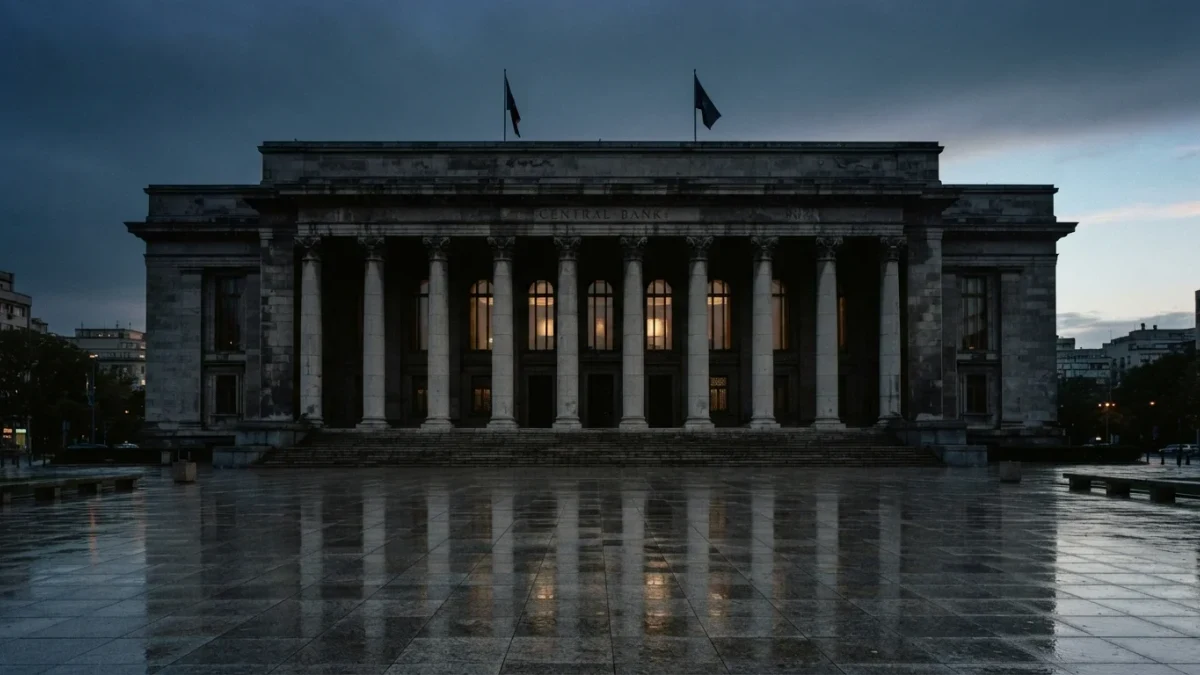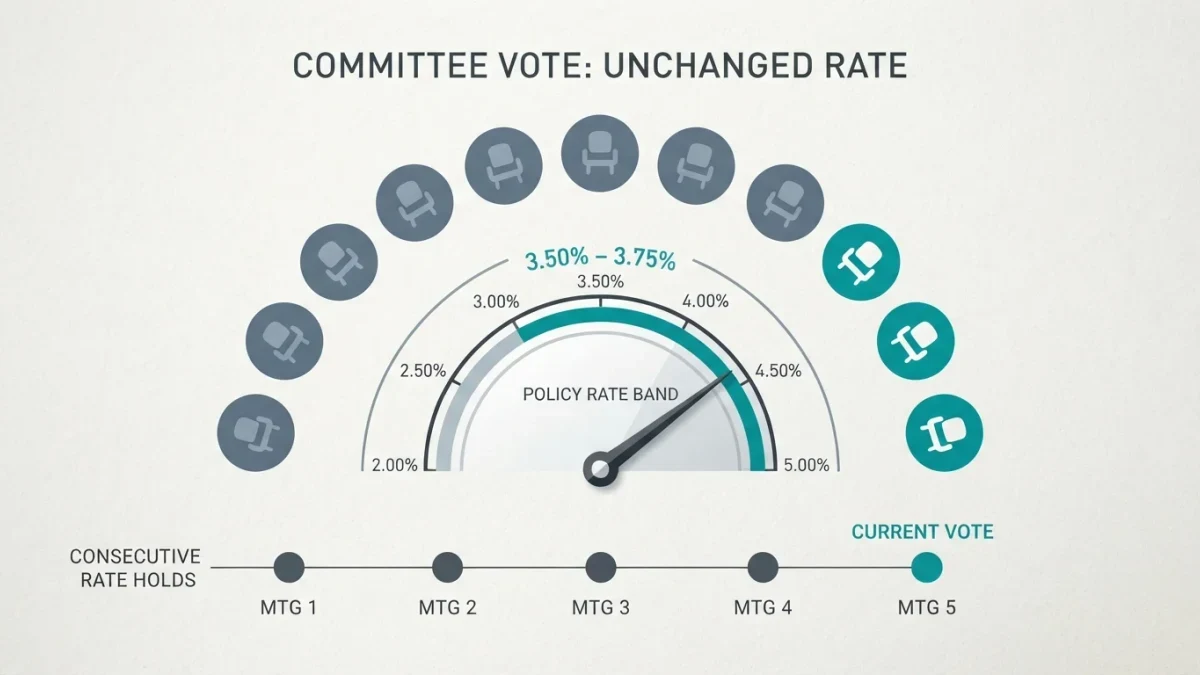
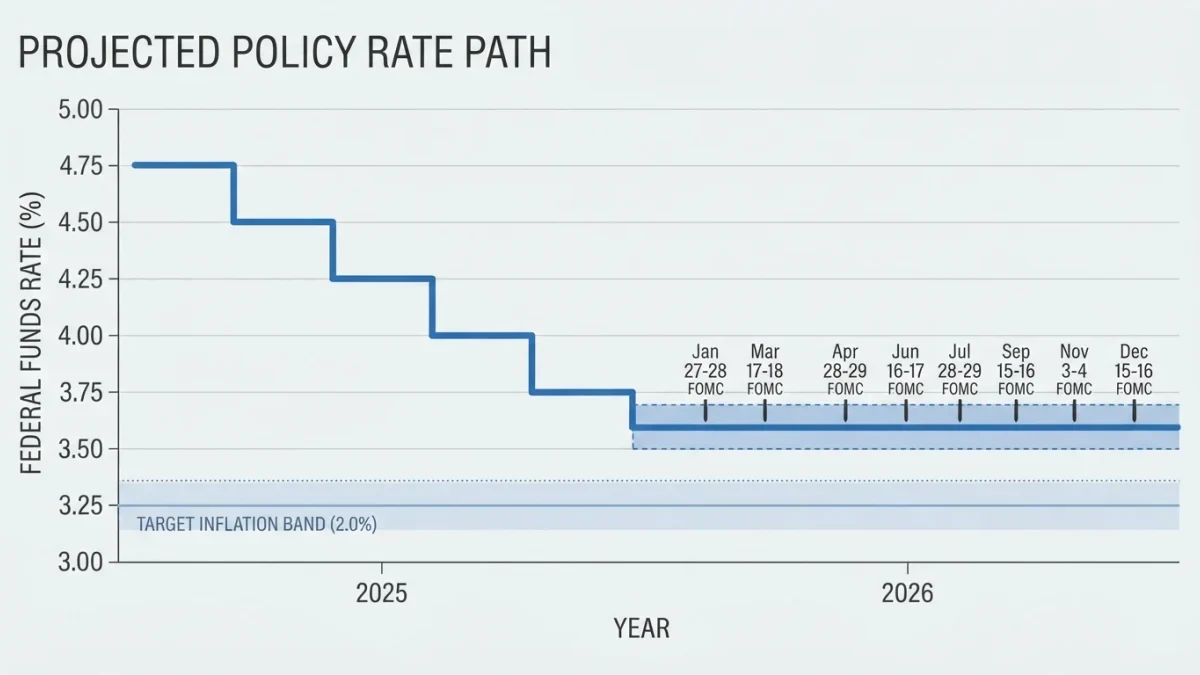
The Federal Open Market Committee held the federal funds target range at 3.50 to 3.75 percent at its January 27-28, 2026 meeting, per the Fed's published statements — leaving untouched the range set by December 2025's cut and opening the new year on pause. The Committee's stated rationale was to watch whether elevated inflationary pressures continue to fade before moving again, the framing the Fed has used across its holding decisions.
Bitcoin Trader publishes information, not investment advice. Central bank decisions are macroeconomic facts, not recommendations for any asset.
What happened?
The January meeting was the first of the Fed's eight scheduled 2026 sessions, and it delivered a hold: the target range stayed at 3.50 to 3.75 percent, where December 2025's quarter-point cut had left it. The decision followed a year in which the Fed had eased from restrictive territory, and it marked the transition from a cutting campaign to a data-watching stance — with inflation still above the two-percent objective and the labor market still firm, the pause let the Committee see whether the last cuts were doing their work before adding more.
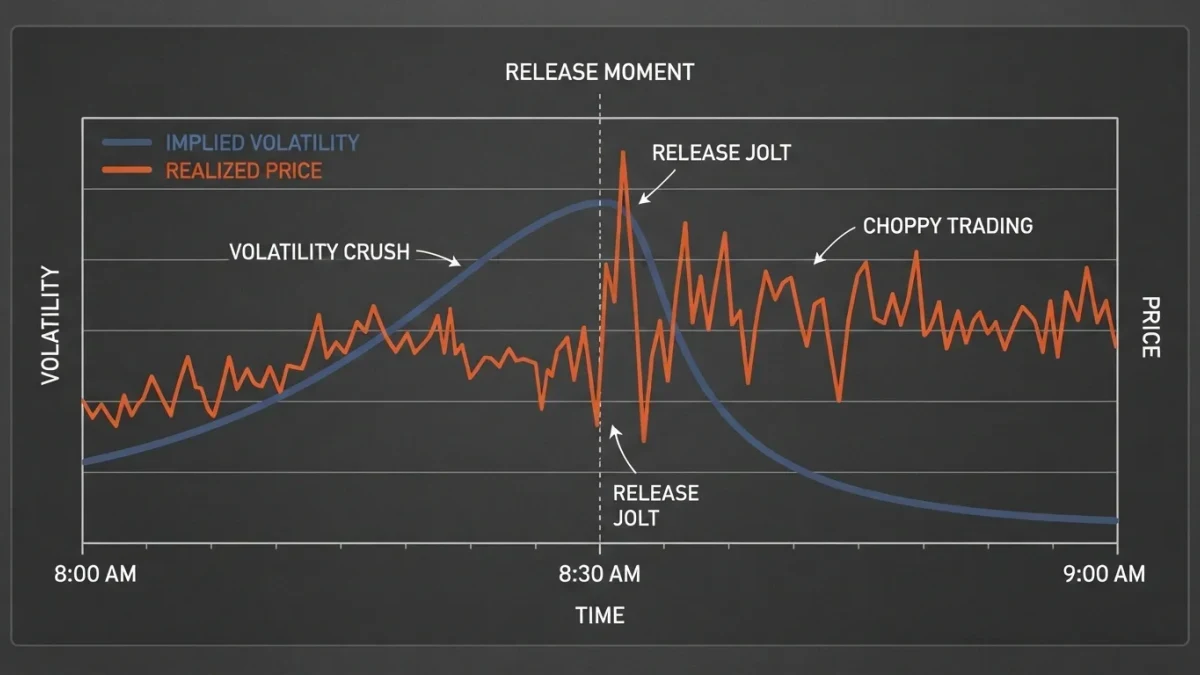
For markets, the January statement mattered less as news than as confirmation: futures pricing heading into the meeting had already assigned low odds to a move, so the print landed as expected. The reaction playbook for a fully priced hold is quiet — and quiet is itself information about how tightly the market had clustered around the pause narrative.
Why does a hold matter for crypto?
Because the holding stance, not the level alone, sets the regime. Crypto's sharpest drawdowns have come in hiking cycles; its strongest expansions in easing ones. A hold with a dovish tilt is supportive liquidity; a hold with an inflation problem is a ceiling — 'higher for longer' repricing long-duration assets downward without a single decision changing. January 2026's hold arrived with bitcoin already in a drawdown — ten-month lows in the final week of the month — and market commentary through the slide cited the repricing of rate expectations among the weights on risk assets.
The transmission runs through two prices the Fed influences: the front-end yield that cash and bills pay — currently making dollars above four percent available at the shortest maturities — and the expected path of that yield. Every asset priced off future value competes with both, and none competes with less cushion than crypto.
What is the angle other coverage skipped?
The calendar arithmetic of the pause. A January hold after a December cut means the easing cycle's momentum ended with the calendar year — and with eight meetings spread across 2026, each hold extends the period during which the discount-rate environment is fixed while the data moves underneath it. The market consequence is that data releases, not meetings, become the live events: between January and March, CPI and employment prints carried the rate-path repricing that the Fed itself declined to do.
The second angle is the inter-meeting market. Bitcoin's January slide and IBIT's record January 30 outflow both landed inside the Fed's blackout-and-decision window — a reminder that in a holding regime, the macro event calendar and the crypto flow calendar increasingly share the same tape.
What should readers watch?
The Fed's own sequence: statements and minutes from the March meeting — published on the FOMC's calendar page, linked below — plus the CPI release schedule from the Bureau of Labor Statistics. In a holding year, the meeting is the confirmation and the data is the news; desks that blur the two end up surprised by the wrong one.
The January hold was, on its own, unremarkable. As the first entry of the year's record, it set the question the rest of 2026 answered meeting by meeting: whether the pause is a waypoint to more easing or a plateau that holds.